Best Portable Generators for Off-Grid Camping
| Enrique Taboada
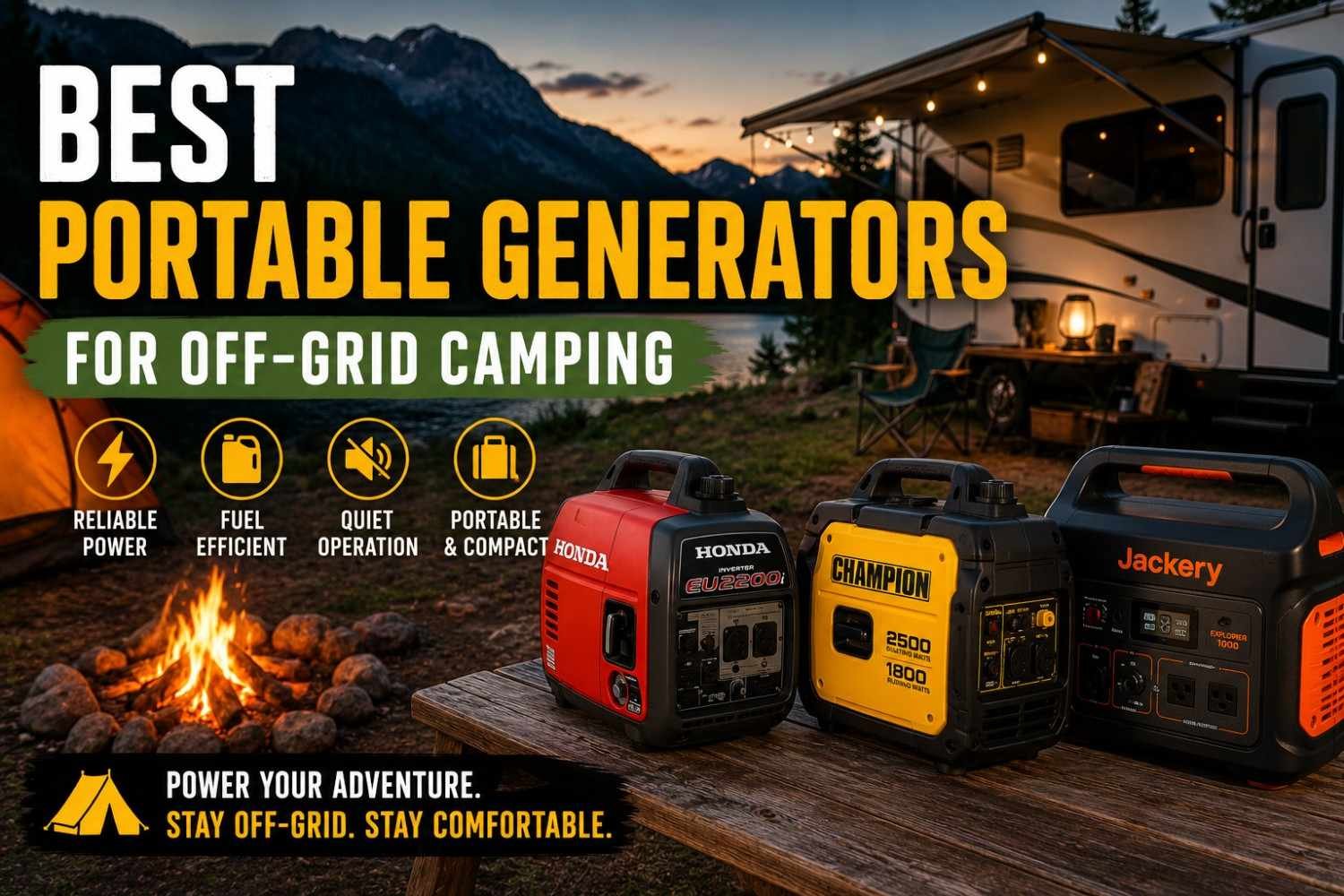
Solar covers most of our power needs off-grid, but there are days it just doesn’t cut it, back-to-back cloudy days, running the AC through a Florida heatwave, or needing a quick power boost when the batteries are running low and the sun isn’t cooperating. That’s where a good portable generator earns its spot in the setup. We’ve run a few different types over the years, and here’s what actually matters when you’re choosing one for real off-grid use, not just backyard backup power.
Inverter vs Conventional Generators
This is the first fork in the road. Conventional generators are cheaper and put out raw power, but that power is “dirty,” meaning it has voltage fluctuations that can damage sensitive electronics like laptops, phones, and battery chargers. Inverter generators produce clean, stable power safe for anything you’d plug in at home, and they’re quieter too.
For camping, especially if you’re charging batteries, running solar charge controllers, or plugging in any electronics, inverter generators are worth the extra cost. We wouldn’t run anything else at this point.
Fuel Type: Gas, Propane, or Dual Fuel
Gasoline generators are the most common and widely available, but gas goes bad if it sits too long, and finding it isn’t always easy in remote areas. Propane burns cleaner and stores indefinitely, which matters if your generator sits unused between trips. Dual fuel units give you the flexibility to run either, which is what we’d recommend if you’re not sure which you’ll rely on more.
If you’re already running propane for cooking or heating, a dual fuel generator means one less fuel type to keep track of and haul around.
Noise Level
Off-grid camping usually means you’re out there for the quiet, and a loud generator ruins that fast, for you and for anyone else within earshot. Look at the decibel rating before buying. Anything in the high 50s to low 60s dB range at a distance is reasonably quiet. Conventional generators tend to run louder than inverter models, which is another point in favor of going the inverter route.
Wattage: How Much Do You Actually Need?
This is where people overbuy or underbuy. A small 2000-watt inverter generator is plenty for charging batteries, running a fridge, and topping off small electronics. If you’re running a full trailer setup with AC, that number climbs fast, you’re likely looking at 3000-3500 watts or more, especially accounting for the startup surge that AC units and compressors need.
Our advice: add up the actual wattage of what you plan to run at the same time, then add a buffer of at least 20% for startup surges. Buying based on guesswork usually means buying twice.
Weight and Portability
If you’re hauling your generator in and out of a trailer or truck bed on every trip, weight matters more than the spec sheet number suggests. The lighter inverter generators in the 2000-2200 watt range are genuinely easy to carry one-handed. Once you get into the higher wattage units, expect to need two hands or a small dolly.
Runtime Per Tank
Generators are usually rated for runtime at 25% or 50% load, not full load, so don’t take the “12 hour runtime” claim at face value if you’re running it hard. Check the runtime at higher load percentages if the manufacturer lists it, that number is more realistic for actual camping use.
Parallel Capability
Some smaller inverter generators can be linked together (in parallel) to double your output when needed, without having to carry one large, heavy unit all the time. This is worth considering if your power needs change a lot between trips, sometimes you need a little, sometimes you need a lot.
Our Take
We run our generator as backup to solar, not as the primary power source, and that changes what we look for. If solar is doing most of the work, a smaller, quieter, more portable inverter generator makes more sense than a big loud unit sized for full-time use. If you’re not running solar at all yet, you’ll want to size up accordingly.
Buy based on your actual setup and how you camp, not the biggest number on the shelf. A generator that’s too big to comfortably carry ends up staying in the garage, and that defeats the purpose.

Enrique Taboada
I live the off-grid life out of Florida, testing solar setups, generators, and trailer mods on real trips, not in a studio. Somewhere between fixing what breaks and figuring out what works better, I started sharing it all, the wins and the mistakes. If it’s on this site, it’s because I’ve actually run it off-grid myself, dog included.
Enrique Taboada
I live the off-grid life out of Florida, testing solar setups, generators, and trailer mods on real trips, not in a studio. Somewhere between fixing what breaks and figuring out what works better, I started sharing it all, the wins and the mistakes. If it’s on this site, it’s because I’ve actually run it off-grid myself, dog included.