Lithium vs AGM Batteries for Camping Setups
| Enrique Taboada
Every off-grid setup eventually comes down to one question: what’s actually storing your power? We went back and forth on this one ourselves before settling on what works for our trailer, and it’s not a simple “one is just better” answer. Both lithium and AGM batteries have a real place in a camping setup, depending on your budget, how you camp, and how much weight you’re willing to haul.
The Quick Version
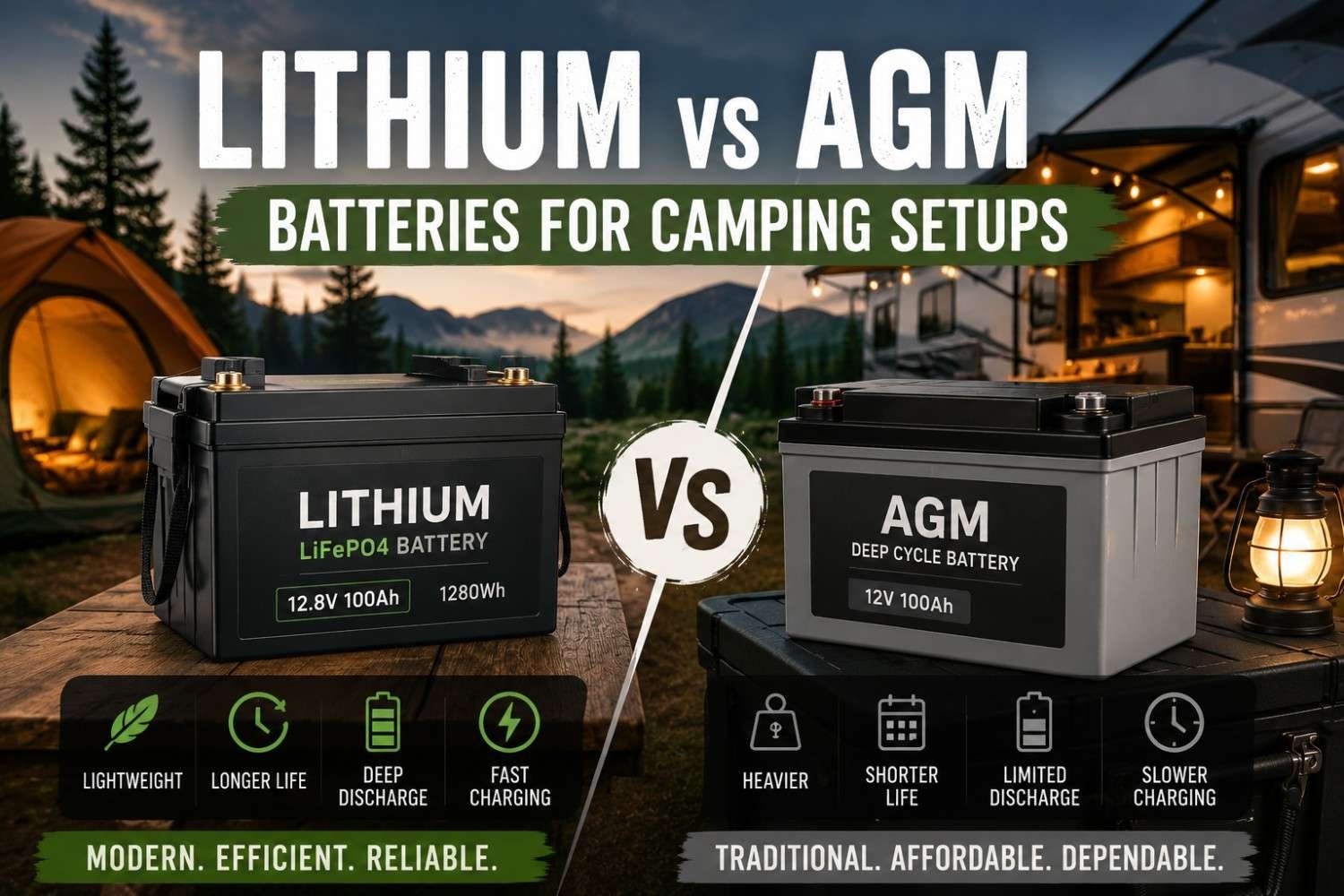
AGM (Absorbent Glass Mat) batteries are the tried-and-true option. They’re lead-acid based, affordable, and don’t need any special charging equipment. Lithium (specifically LiFePO4, which is what you want for camping) is the newer, pricier option that outperforms AGM in almost every practical way except upfront cost.
If that’s all you needed, you’d probably lean lithium and stop reading. But the details matter more once you’re actually living out of a trailer.
Weight
This is the one that surprised us the most. A 100Ah AGM battery weighs somewhere around 60-65 lbs. A 100Ah lithium battery of the same capacity weighs closer to 25-30 lbs, less than half. If you’re hauling a trailer any real distance, or you’re trying to keep your rig’s weight down for fuel efficiency and towing safety, this difference adds up fast.
Usable Capacity
Here’s the part a lot of people miss when comparing the two on paper. AGM batteries shouldn’t be discharged below 50% regularly without shortening their lifespan, so a 100Ah AGM battery really only gives you about 50Ah of usable power. Lithium batteries can safely discharge down to around 10-20%, meaning that same 100Ah lithium battery gives you closer to 80-90Ah of usable power. So even though the rated capacity looks the same on the label, lithium is doing almost double the actual work.
Lifespan
AGM batteries typically last 300-500 charge cycles before they start losing capacity. LiFePO4 batteries are rated for 2,000-5,000 cycles, depending on the brand and how well they’re maintained. If you’re camping regularly and cycling your battery often, lithium ends up being the better long-term value even with the higher price tag upfront, because you’re not replacing it every couple of seasons.
Charging Speed
Lithium batteries accept a charge much faster than AGM, which matters if you’re relying on solar and only get a few hours of good sun. AGM batteries need to slow their charge rate as they approach full to avoid damage, which means more time sitting around waiting. Lithium can take a higher charge rate the whole way, so you spend less time tethered to your panels.
Cold Weather Performance
This one goes in AGM’s favor. Lithium batteries generally can’t be charged below freezing without a built-in heating element (some newer models have this, but it adds cost), while AGM handles cold temps without any special accommodations. If you’re camping somewhere that dips below freezing regularly, this is worth factoring in.
Cost
AGM is still the budget-friendly option, often less than half the price of an equivalent lithium setup. If you’re just getting started with an off-grid power system and don’t have the budget for lithium yet, AGM is a completely reasonable place to begin. You can always upgrade later.
What We Run
We made the switch to lithium for our main power setup, mainly because of the weight savings on the trailer and not wanting to think about battery replacement every year or two. But we know that’s not the right call for every budget, and AGM got us through plenty of trips before that switch.
Our Honest Take
If weight, longevity, and charging speed matter more to you than upfront cost, lithium is worth the investment. If you’re testing out off-grid camping for the first time and don’t want to drop a lot of money before you know it’s for you, AGM is a smart, proven starting point. Neither one is the wrong answer, it just depends on where you are in your off-grid journey.

Enrique Taboada
I live the off-grid life out of Florida, testing solar setups, generators, and trailer mods on real trips, not in a studio. Somewhere between fixing what breaks and figuring out what works better, I started sharing it all, the wins and the mistakes. If it’s on this site, it’s because I’ve actually run it off-grid myself, dog included.
Enrique Taboada
I live the off-grid life out of Florida, testing solar setups, generators, and trailer mods on real trips, not in a studio. Somewhere between fixing what breaks and figuring out what works better, I started sharing it all, the wins and the mistakes. If it’s on this site, it’s because I’ve actually run it off-grid myself, dog included.